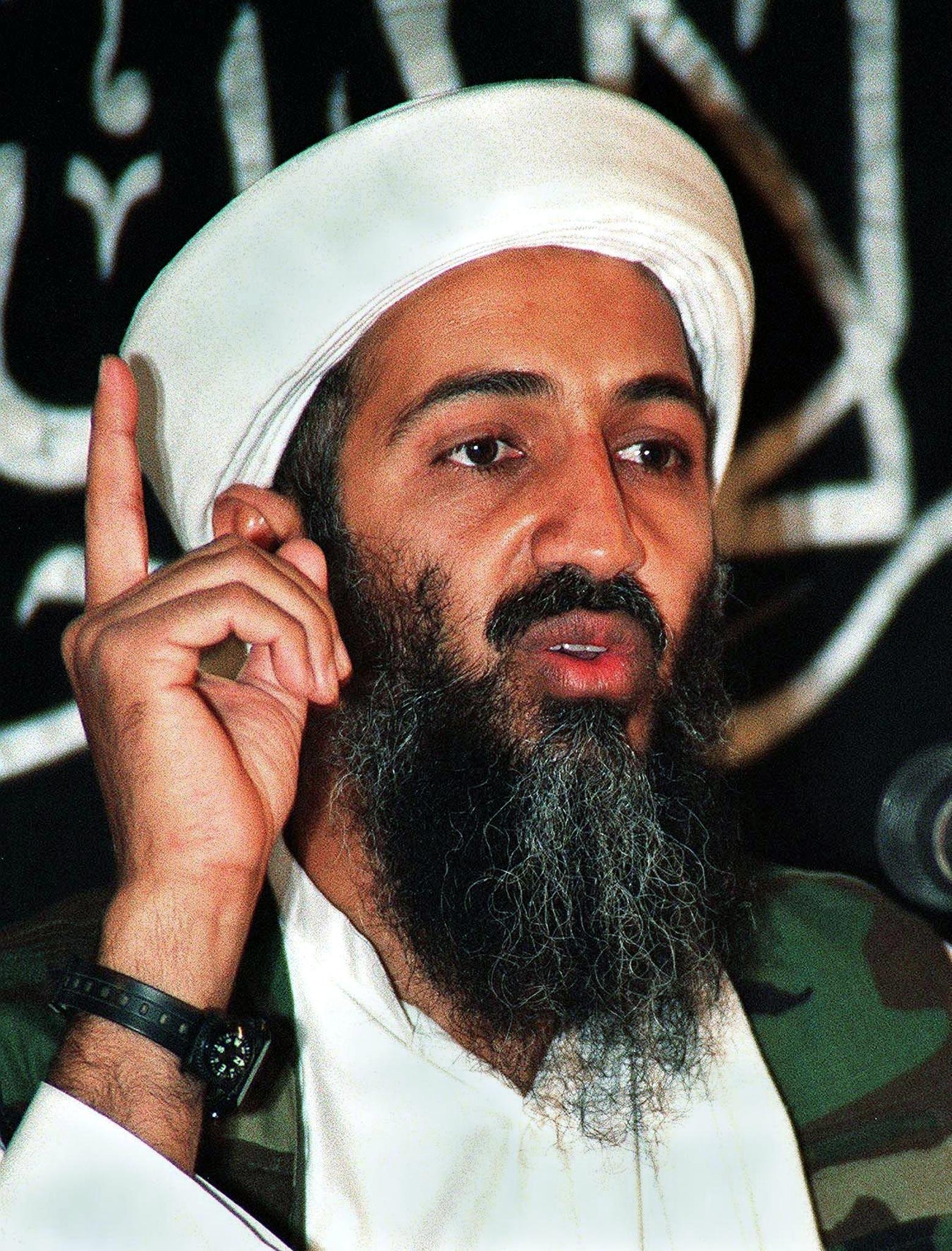
Osama Bin Laden Biography: Osama bin Laden is a name that is deeply tied to terrorism and extremist ideology. The founder of al-Qaeda, bin Laden, orchestrated some of the most catastrophic acts of terrorism in modern history, most notably the September 11, 2001, attacks in the United States, which caused widespread destruction and loss of life. His actions not only changed the course of history but also had a profound impact on global security, international relations, and counterterrorism efforts. For decades, bin Laden was the face of global jihad, leading al-Qaeda’s violent campaigns against what he saw as Western imperialism.
Even after he died in 2011, Osama bin Laden’s influence continues to be felt around the world, as his ideology still inspires extremist movements. Bin Laden’s personal history, from his privileged beginnings to his radicalisation and leadership of a global terrorist network, is a complex story of a man who sought to reshape the political and religious landscape of the Middle East and beyond.
In this detailed biography, we explore Osama bin Laden’s early life, rise to power, career, ideology, personal life, and the legacy he left behind. Additionally, we’ll delve into his net worth, how he financed his operations, and the ongoing effects of his actions in the world today.
Osama Bin Laden Biography
Osama bin Laden was born on March 10, 1957, in Riyadh, Saudi Arabia. He was the 17th child of Mohammed bin Laden, a wealthy construction magnate of Yemeni descent, and Hamida al-Attas, his tenth wife. His father’s wealth and close ties to the Saudi royal family provided bin Laden with a privileged upbringing, with access to a luxurious lifestyle and education. The family’s construction business, the Saudi Binladin Group, played a significant role in the modernisation of Saudi Arabia, contributing to the development of the country’s infrastructure.
Despite his family’s wealth, Osama bin Laden’s life was marked by a sense of emotional distance from his father. His father’s untimely death in a plane crash in 1967 left Osama and his siblings with a divided inheritance, with Osama receiving a portion of the vast fortune. However, bin Laden’s focus shifted toward his personal ideological beliefs and away from the family business.
Raised in a strict Sunni Muslim household, bin Laden developed a deep commitment to religious doctrine. His formative years, which were spent in the Kingdom of Saudi Arabia, exposed him to conservative interpretations of Islam, which would eventually shape his radical views. Bin Laden’s shift toward a more militant form of Islam came during his university years, where he began to question the traditional values of his family and was drawn to extremist ideologies that rejected Western influence.
Education and Radicalization
Osama bin Laden attended Al-Thagher Model School in Jeddah for his early education and later enrolled at King Abdulaziz University in Jeddah, where he studied business administration. However, it was during his time at university that he encountered the writings of radical Islamist thinkers, most notably Sayyid Qutb, whose ideas on jihad and the confrontation between Islam and the West would deeply influence bin Laden’s philosophy.
While at the university, bin Laden became increasingly involved in Islamic activism. His beliefs were shaped by the teachings of the Muslim Brotherhood, an organization that advocates for the establishment of an Islamic state governed by Sharia law. These beliefs would later become the foundation of his militant worldview, leading him to adopt the radical interpretation of Islam that justified violence in the name of religious duty.
It was also during this period that bin Laden developed his passion for jihad, or holy war, against perceived enemies of Islam. In particular, his opposition to the presence of U.S. military forces in Saudi Arabia and the Middle East, following the Gulf War in 1991, would fuel his animosity toward the West and establish a core theme of al-Qaeda’s global strategy.
Osama Bin Laden Rise to Power and the Creation of al-Qaeda.
The Afghan-Soviet War and the Birth of al-Qaeda
In the late 1970s, Soviet forces invaded Afghanistan, sparking a militant resistance from Afghan fighters known as the mujahideen. Bin Laden saw the Soviet invasion as a holy war and, inspired by his radical beliefs, travelled to Pakistan in 1979 to join the fight. Using his inherited wealth, he helped organise and fund the Afghan mujahideen, establishing training camps and logistical networks to support the fighters.
During this time, bin Laden gained valuable experience in organizing and leading militant groups. He also began to form alliances with other Islamic fundamentalists and extremists, including Abdullah Azzam, a Palestinian scholar who would later become bin Laden’s mentor. Together, they co-founded Maktab al-Khidamat (MAK), a charitable organisation that helped recruit and train foreign fighters to join the Afghan resistance.
Bin Laden’s contributions to the Afghan-Soviet War were significant, but after the Soviet Union withdrew from Afghanistan in 1989, bin Laden’s ambitions grew. With the mujahideen’s victory, bin Laden transitioned from local conflicts to a more global strategy. By 1988, he had founded al-Qaeda, an organisation aimed at establishing an Islamic caliphate through violent jihad. The organisation’s name, al-Qaeda, meaning “the base” in Arabic, reflected its mission to serve as a base for jihadist operations worldwide.
Ideology and Goals of al-Qaeda
Al-Qaeda’s primary goal was to create a global Islamic caliphate, which a strict interpretation of Sharia law would govern. Bin Laden promoted violent jihad as the only means to achieve this goal, and al-Qaeda’s activities were characterised by their use of terrorism as a tool to target Western governments, interests, and civilians. Bin Laden’s ideology justified violent attacks against civilians, including U.S. nationals, as part of a religious struggle against perceived infidels and apostate Muslim governments that were seen as corrupt and aligned with the West.
The group’s anti-Western ideology, particularly its animosity toward the United States, became a central theme of bin Laden’s mission. He viewed U.S. influence in the Middle East and the presence of U.S. military forces in Saudi Arabia as an attack on Islam. Bin Laden’s goal was to expel Western powers from Muslim-majority countries and establish an Islamic system of governance based on his radical beliefs.
Al-Qaeda’s Major Attacks
In the years following al-Qaeda’s formation, the organization carried out numerous high-profile terrorist attacks. The most infamous of these was the September 11, 2001, attacks, in which 19 al-Qaeda terrorists hijacked four commercial airliners and carried out coordinated suicide attacks. Two planes were flown into the World Trade Centre in New York City, one into the Pentagon in Washington, D.C., and the fourth plane crashed in Pennsylvania after passengers attempted to overpower the hijackers. Nearly 3,000 people died as a result of the attacks.
Bin Laden initially denied responsibility for the attacks but later acknowledged his role in planning and orchestrating the operation. The September 11 attacks were the most devastating terrorist attacks in U.S. history and marked a turning point in the global fight against terrorism.
War on Terror and U.S. Pursuit
Following the September 11 attacks, the U.S. government launched a global War on Terror, targeting al-Qaeda and its affiliates. In 2001, the U.S. invaded Afghanistan to dismantle the Taliban regime, which had been harboring bin Laden and other al-Qaeda members. Despite the military intervention, bin Laden remained elusive for years, moving through various hideouts in Afghanistan and Pakistan.
In 2002, the U.S. government placed a $25 million reward on bin Laden’s head, and an extensive global search began. For nearly a decade, bin Laden managed to avoid capture, continuing to issue statements calling for further attacks against the West.
Death of Osama bin Laden
After nearly a decade of evading capture, bin Laden was located in a compound in Abbottabad, Pakistan, in 2011. The CIA had been monitoring the compound for months and, after confirming his presence, launched a covert operation known as Operation Neptune Spear to capture or kill him.
On May 2, 2011, U.S. Navy SEALs raided the compound and killed bin Laden in a firefight. His death was confirmed by U.S. President Barack Obama, who announced the successful operation to the public. Bin Laden’s body was buried at sea, in accordance with Islamic traditions.
Bin Laden’s death was a symbolic victory in the fight against terrorism, but it did not mark the end of al-Qaeda’s operations. The organisation continued to operate in various regions, though its influence has waned in recent years with the rise of groups like ISIS.
Legacy and Influence
Osama bin Laden’s legacy is one of global terrorism, fear, and destruction. His role in orchestrating the September 11 attacks redefined the global security landscape and led to significant changes in U.S. and international policies. The War on Terror, which bin Laden’s actions directly initiated, has led to wars in Afghanistan and Iraq, the creation of the Department of Homeland Security, and the widespread implementation of counterterrorism measures.
Despite his death, bin Laden’s extremist ideology continues to influence groups around the world. His leadership of al-Qaeda provided the framework for many of today’s most dangerous terrorist organisations. The fight against terrorism remains a central concern for global security.
Osama Bin Laden Net Worth and Financial Background
At the time of his death, Osama bin Laden’s net worth was estimated at between $25 million and $30 million. He inherited this wealth from his father’s construction empire. Despite his fortune, bin Laden’s financial dealings were always shrouded in secrecy. He used his wealth to finance al-Qaeda’s activities, including training camps, terrorist attacks, and recruiting new members. His family fortune played a crucial role in sustaining al-Qaeda’s operations, particularly in the early years.
Conclusion
Osama bin Laden’s life and actions continue to shape global politics and security today. As the founder of al-Qaeda and the mastermind behind the September 11 attacks, he left a legacy marked by destruction, terrorism, and a global battle against extremism. His death in 2011 was a significant moment in the fight against terrorism, but the war on terror is far from over.
His ideological influence continues to inspire radical movements, and the consequences of his actions are still being felt across the globe. Understanding his life, his beliefs, and the way he shaped the world is essential for understanding modern global conflicts and the ongoing challenges posed by terrorism.
Want to understand more about the legacy of Osama bin Laden and his impact on global security? Keep exploring the complexities of modern terrorism and the global efforts to prevent extremism.